
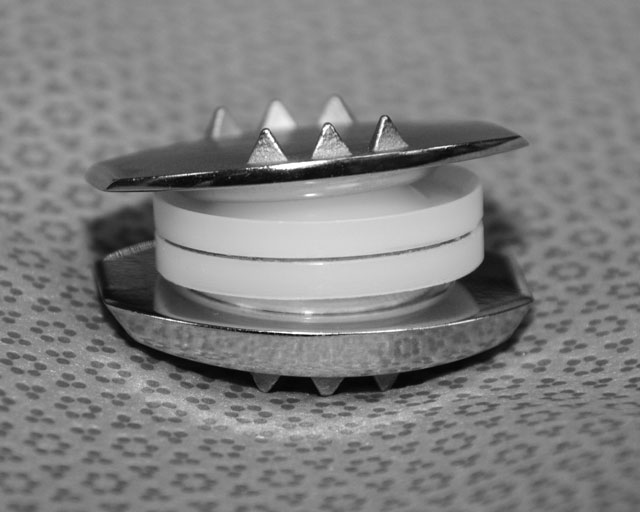
The artificial disc replacement (ADR) for lumbar spine has been designed to allow some motion of the defective segment by replacing the damaged disc with this implant. This theoretically reduces some stress on the segment above to prevent further degeneration of this superior segment. The artificial disc however has some significant deficiencies that need to be discussed.
First- the artificial disc does not mimic the behavior of a normal lumbar disc. The normal lumbar disc allows motion but is restrained at endpoint of motion. That is- the normal disc acts like a bushing where motion at the extreme limits is dampened by the fibers of the annulus. The artificial disc does not have this constraint and this puts more stress on the facets than the normal disc would. Also, the artificial disc does not have shock absorption capabilities like the normal disc does. This rigidity in compression can allow increased wear and can cause back pain after implantation.
Second- the artificial disc replacement (ADR) for lumbar spine surgery to implant the disc is done from the front of the spine through the belly. The vena cava, aorta and great vessels need to be mobilized to implant this disc. This in itself can be a problem. The greater problem is if this disc needs to be replaced in the future. The adhesions that form from the initial implantation surgery can make removing or replacing this disc dangerous. In addition, injury to the sympathetic nerve plexus that lives next to this disc can occur. At the minimum, this would cause a “warm leg sensation” on one side and in males, there is a 3-5% chance of retrograde ejaculation. Abdominal hernias can occur as the belly wall needs to be incised to implant this disc.
Are you a candidate for artificial disc replacement (ADR) for the lumbar spine?
Would you like to consult with Dr. Corenman about your condition?
You can set up a long distance consultation to discuss your
current X-rays and/or MRIs for a clinical case review.
(Please keep reading below for more information on this treatment.)
Third is that over time, if the patient becomes osteoporotic, the disc can erode into the endplate of the vertebra which causes increased pain and dysfunction of this segment.
Fourth is that the disc is made of chrome-cobalt alloy. This alloy obscures MRI images so assessment of this segment in the future becomes much more difficult.
Finally- the lack of “normal” motion of the artificial disc can wear out the facets in back which will lead to back pain and fusion of the segment. Also- this motion can allow bone spurs to occur which could lead to nerve root compression.
To learn more about artificial disc replacement (ADR) for the lumbar spine, contact Dr. Donald Corenman, spine surgeon and back specialist in the Vail, Aspen, Denver and Grand Junction, Colorado communities.
Related Content
- Scoliosis Surgery
- Transforaminal Lumbar Interbody Fusion (TLIF)
- Posterolateral Fusion (PLF)
- Anterior Lumbar Interbody Fusion
- XLIF/DLIF Far lateral Interbody Fusion
- Microdiscectomy or Fusion?
- Minimally Invasive Lumbar Fusion
- Myths of Minimally Invasive Spine Surgery
- Myths of Laser Spine Surgery
- Indications for Lumbar Fusion
- X-Stop Procedure
(Click to Enlarge Image)
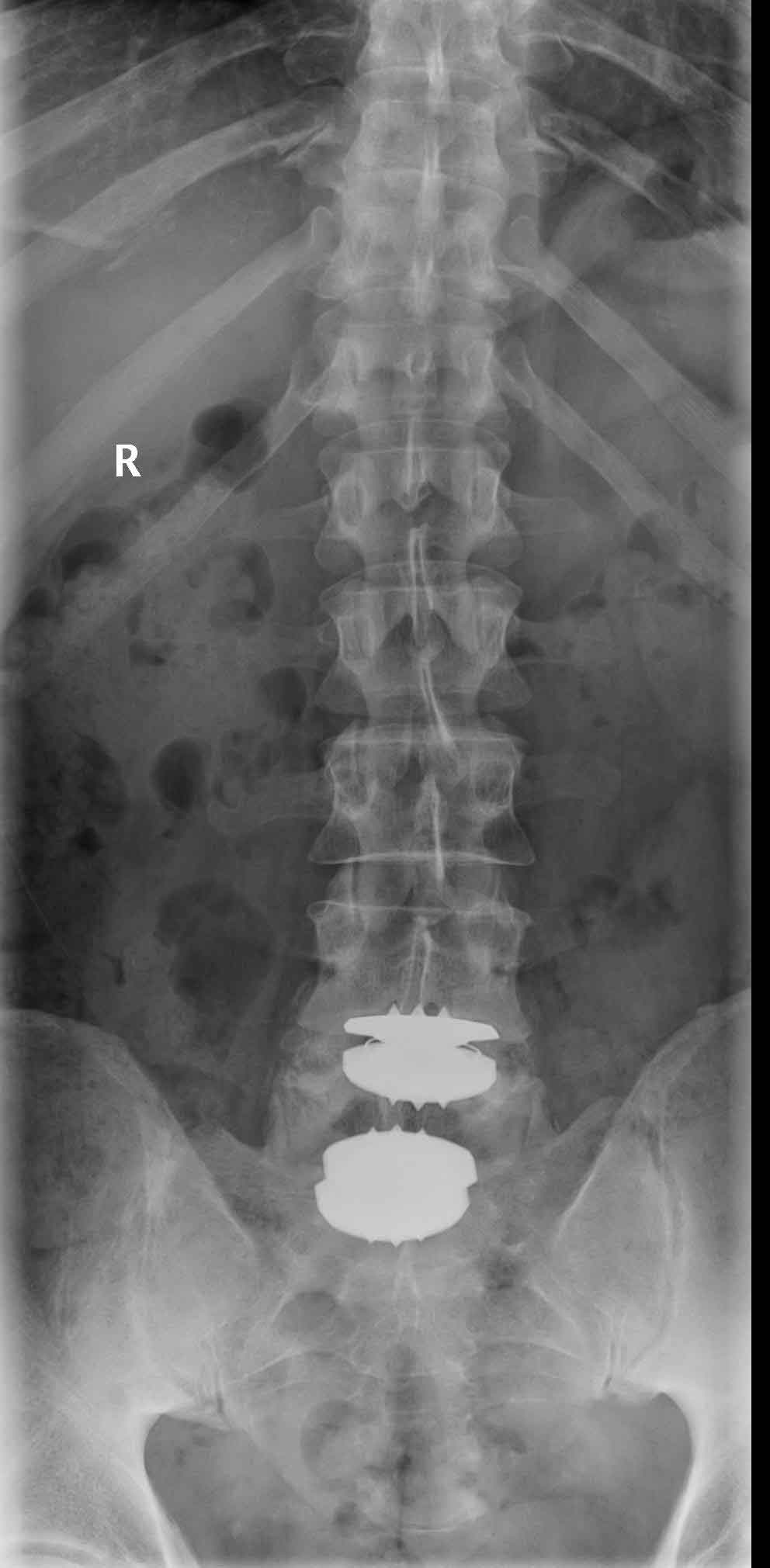
(Click to Enlarge Image) Patient had lumbar ADRs 7 years earlier. He did well for five years and then had return of lower back pain.
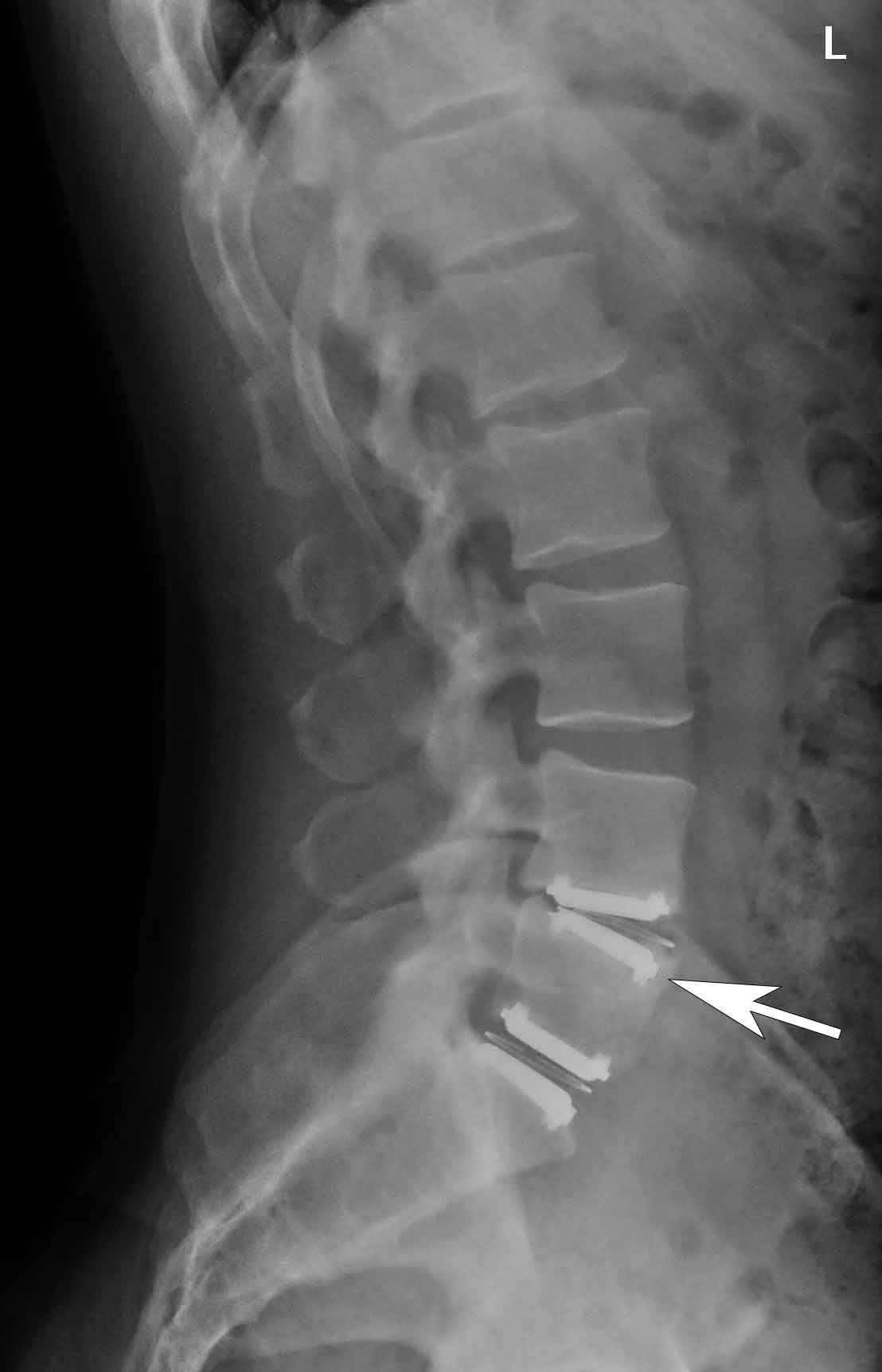
(Click to Enlarge Image) Side view X-ray of the artificial discs. The arrow points to the metal disc endplate receding into the vertebra causing failure.
